

Fire & Water Damage Restoration for Atlanta Property Managers
We’ve worked hundreds of fire and water losses across metro Atlanta since the late 2000s. From Midtown high-rises where a single sprinkler head failure can cascade through fifteen floors, to Gwinnett garden-style communities where a kitchen fire in one unit sends smoke into twelve adjacent apartments, to aging stock in Decatur and East Point where galvanized pipes finally give out at 2 a.m.—we’ve seen what separates manageable claims from six-figure disasters.
This comprehensive guide exists because fire and water damage aren’t homeowner emergencies for you. They’re business problems. Liability exposure under Georgia’s landlord-tenant laws. Tenant displacement costs running $5,000 to $15,000 per unit monthly for hotel relocations in Atlanta. Rent roll disruption that tanks your NOI. CAM reconciliations that become nightmares. Insurance claim outcomes that determine whether your property value holds or drops 10-20% overnight.
We’re covering both fire/smoke and water damage in one guide because they almost always overlap. Sprinkler discharges accompany fires. Suppression efforts leave standing water in units. Broken risers flood mechanical rooms. Roof leaks compound fire damage when Georgia thunderstorms roll through before tarping is complete. If your vendor can’t handle both, you’re managing two contractors and doubling your coordination headaches.
What follows is a field-tested playbook: what to do in the first 2 hours, what to expect in the first 7 days, and how to hold vendors accountable through closeout. No generic advice. No SEO filler. Just the operational and financial reality of managing losses in Gwinnett, Fulton, Cobb, Cherokee, and Hall counties.
The Property Manager’s Risk Profile After a Fire or Water Loss
A single kitchen fire in a Buckhead mid-rise or a broken supply line in a Duluth townhouse building can create six-figure exposure if mishandled. We’ve watched property managers turn $30,000 claims into $150,000 disasters simply by waiting 48 hours to start mitigation or failing to document conditions before cleanup. Understanding your risk profile isn’t academic—it directly affects your job security, your property’s value, and your ownership’s confidence in your management.
Liability exposure hits from multiple angles:
Habitability issues under O.C.G.A. § 44-7-13 requiring habitable conditions within 7 days of notice
Mold claims accelerated by Atlanta’s humid summers where colonies grow up to 1 inch per day in untreated areas
Smoke inhalation complaints from tenants in adjacent units where migration wasn’t properly assessed
Slip-and-fall during mitigation when access control fails and residents walk through active work zones
Tenant displacement creates immediate financial pressure:
Lease obligations for relocation assistance or rent abatement
Temporary housing costs averaging $5,000-$15,000 per unit monthly in metro Atlanta
Business interruption claims from commercial tenants—restaurants, medical offices, retail—in Cobb and Fulton mixed-use properties
Extended vacancy when reconstruction timelines slip from 30 days to 90 days
Insurance friction compounds losses:
Incomplete documentation leading to 25% claim denial rates in Georgia filings
Scope disputes when pre-demolition photos weren’t captured
Delayed adjuster approvals stretching vacancy days while you wait for authorization
Depreciation adjustments of 15-25% when mitigation doesn’t meet IICRC standards
A 2022 grease fire in a Norcross 48-unit complex illustrates the stakes. Initial damage assessment showed $85,000 in affected areas. Property management waited 60 hours for the adjuster before authorizing mitigation. By the time drying equipment arrived, water from suppression had wicked into wall cavities across multiple units. Mold remediation added $65,000. Tenant relocation and lost rent pushed total exposure past $210,000. The difference was 60 hours of delay.
First 0–24 Hours: Response Steps for Property Managers
What you do in the first 2-4 hours after the fire department leaves often determines whether your claim is painful or routine. Secondary damage from water, smoke migration, and contamination accelerates rapidly in Atlanta’s climate. The fire damage restoration process doesn’t pause while you wait for approvals.
For fire and smoke events:
Board-up all compromised windows and doors using 5/8-inch plywood per FEMA P-259 standards
Roof tarping to protect against Georgia’s frequent thunderstorms—averaging 50+ annually in metro Atlanta
Secure access points to prevent vandalism in high-density areas like Midtown or Duluth
Temporary shoring of compromised structural elements if identified by the fire marshal
For water damage:
Stop the water source immediately—shut valves, isolate risers, coordinate with plumber if needed
Begin water extraction using professional equipment, not shop vacs from the maintenance closet
Deploy dehumidification to combat Atlanta’s 70-90% summer humidity
Understand that mold growth begins in 48-72 hours without proper drying
Your 0-24 hour checklist:
Confirm life-safety and structural clearance with the fire marshal or building official before entering affected areas
Notify your carrier and broker immediately—open a claim number and document date, time, and initial cause (stove-top, electrical panel, sprinkler head, supply line failure)
Call your pre-vetted IICRC-certified restoration contractor, not maintenance staff, for mitigation
Take geo-stamped photos and short videos of all affected units, common areas, mechanical rooms, and roof before any cleanup starts
Separate urgent habitability issues (smoke-heavy units, wet electrical rooms, unsafe egress) from cosmetic concerns
Secure keys and access control—know who’s entering the property and when
Begin tenant communication with factual information about what happened and immediate next steps
Atlanta-specific operational issues:
Summer thunderstorms can compound fire damage within hours if roof penetrations aren’t tarped
Sub-70°F winter nights cause pipe breaks in older uninsulated attic runs throughout Cherokee and Hall counties
High baseline indoor humidity makes “wait and see” a non-option—standing water becomes mold in days
Vacant units with AC turned off are particularly vulnerable to rapid contamination
Understanding the Fire & Smoke Restoration Process
Smoke behavior, soot types, and heat patterns drive the scope of every fire loss. Not all fire jobs are equal. A protein fire from cooking in a Midtown condo produces oily, pungent residue requiring solvent cleaning at $4-8 per square foot. A fully involved attic fire in a 1980s Lawrenceville townhome involves charred framing, structural assessment, and complete reconstruction. Understanding the fire restoration process helps you evaluate scopes and hold vendors accountable.
Water damage from firefighting efforts is typically integrated into the same project. Suppression systems discharge hundreds of gallons. Fire department hoses saturate building materials. This contaminated water—often Category 3 due to mixing with soot and debris—must be extracted and dried professionally. Insist on a contractor competent in both fire and water mitigation, or you’ll manage handoffs that balloon costs and timelines.
Emergency services begin immediately after fire department release. Board-up, roof tarping, temporary shoring, and emergency power where needed. We’ve stabilized countless Cobb County strip malls this way, preventing wind-driven rain from worsening char damage before reconstruction begins.
Detailed inspection maps the full extent of damage. This means room-by-room assessment including above drop ceilings, shaft spaces, and adjacent units. Smoke migrates 50-100 feet through unsealed cracks and HVAC systems. After a 2021 restaurant fire on Peachtree Road, smoke traveled three floors up through chases; inspection of chase spaces and HVAC trunks was critical to avoiding future odor complaints from tenants who weren’t even in the fire-affected area.
Soot and smoke residue removal varies by soot type. Dry soot from paper and plastics responds to HEPA vacuuming at 99.97% efficiency. Oily protein soot from cooking requires solvent cleaning. Wet soot from fuel oil needs encapsulants. Smoke damage cleanup of HVAC ducts via agitation and negative air machines prevents recontamination—a step often skipped by inexperienced vendors.
Odor control employs thermal fogging, ozone generators (5,000-10,000 mg/hr output), or hydroxyl treatments. Charred structural members must be sealed to prevent smoke odors from bleeding through new finishes. Cutting corners here means callbacks in 6-12 months when tenants complain about persistent smells.
Contents handling includes pack-out to offsite cleaning facilities, where salvageable items—often 60-80% in smoke-only fires—undergo ultrasonic cleaning, ozone treatment, or thermal fogging. Personal belongings and personal property must be inventoried with RFID tracking for insurance reconciliation. We’ve restored $200,000+ inventories from Cherokee County apartments this way.
Reconstruction brings the property back to pre-loss condition: drywall (5/8-inch Type X fire-rated), electrical rewiring per NFPA 70, plumbing, insulation with vapor barriers, and finishes. Full rebuilds span 2-6 months and cost $50-$150 per square foot residential, $100-$250 commercial in metro Atlanta.
Understanding the Water Damage Mitigation Process
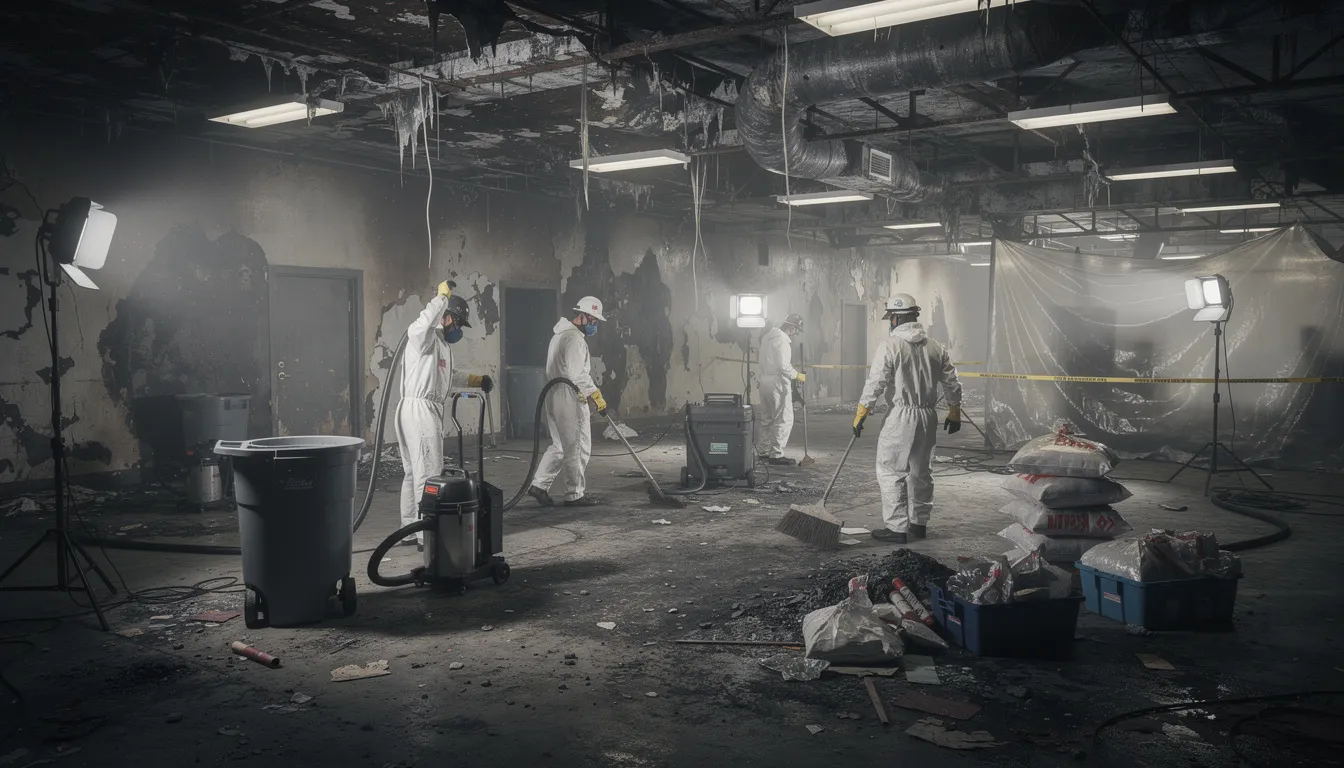
In Atlanta, the majority of large-loss calls from property managers are water-driven: sprinkler discharges, failed flex lines under sinks, roof leaks during summer storms, burst pipes in winter cold snaps. These events tie directly into mold and odor issues if the damage restoration process isn’t handled correctly from the start.
Safety and source control come first. Shut off the water source. Lock-out/tag-out electrical systems if water contacted panels or outlets. Verify structural stability before crews enter. This isn’t optional—it’s the foundation of every water damage restoration project.
Categorization and classification determine salvage versus removal decisions:
Category 1: Clean water from supply lines—most salvageable
Category 2: Gray water from appliances, some contamination—salvage possible with proper cleaning
Category 3: Black water from sewage, toilet overflow, or floodwater—extensive removal required
Classification (Class 1-4) describes the extent of water penetration and drying difficulty. Your contractor should explain these in plain terms and document them for insurance.
Water extraction uses truck-mounted extractors removing 100+ gallons per hour, portable units for access-limited spaces, and weighted extraction for carpets in high-rise corridors. Water removal must be thorough before drying equipment deployment.
Drying requires strategic placement of dehumidifiers (40-70 pints per day capacity) and air movers (3,000+ CFM). Moisture mapping of walls, subfloors, and shafts with daily readings logged for insurance establishes the drying curve. Target moisture content below 15% before reconstruction.
Material decisions determine scope and cost:
Drywall wet above 48 hours or showing visible mold—remove
Particleboard cabinets common in 1990s Cobb and Gwinnett apartments—remove when saturated
LVP and carpet tiles—often salvageable if dried within 24-48 hours
MDF trim—typically requires replacement
Insulation—fiberglass can dry; cellulose typically must go
Anti-microbial application treats surfaces after cleaning but doesn’t replace proper drying. It’s a preventive measure, not a substitute for extracting moisture from building materials.
Atlanta’s humidity—often 70%+ in summer—accelerates mold growth in as little as 48 hours. Poorly ventilated utility closets, interior bathrooms without exhaust, and units with HVAC off are highest risk. Delays beyond 24-48 hours amplify secondary damage costs by 40-60%.
What to insist on from vendors:
Psychrometric reports showing temperature, humidity, and grain depression
Daily moisture logs with readings by location
Clear communication on projected dry times
Scope changes explained in writing before execution
Equipment counts matching the space and class of loss
What IICRC Certification Actually Means for Your Claims
IICRC—the Institute of Inspection, Cleaning and Restoration Certification—is the standards body that insurance carriers and attorneys reference when evaluating fire and water mitigation work. Understanding what certification means helps you vet vendors and protect your claims.
Key standards relevant to property managers:
S500: Standard for Professional Water Damage Restoration—governs extraction, drying, and documentation
S520: Standard for Professional Mold Remediation—applies even when mold isn’t yet present, governing prevention
S700/S740: Standards addressing fire and smoke damage restoration—covers cleaning, deodorization, and salvage
What IICRC-certified firms and technicians demonstrate:
Formal training (40+ hours minimum) on drying science, cleaning methods, and safety protocols
Psychrometric expertise—understanding how temperature, humidity, and airflow interact
Standardized documentation practices aligned with carrier expectations
Use of category and class definitions that determine what can be dried versus what must be removed
How this directly affects your insurance claims:
Adjusters approve scopes and invoices referencing IICRC standards at higher rates—95% approval for IICRC firms versus 70% for uncertified
Reduces pushback on line items like equipment rental days, controlled demolition, or specialized cleaning
Provides defensible documentation if a tenant attorney questions your mold remediation decisions in 12-24 months
Minimizes depreciation adjustments by 15-25% on Atlanta policies by proving “like-new” mitigation
In 2020, a Fulton County mid-rise experienced a significant water intrusion from a failed cooling tower. The IICRC-certified contractor’s moisture logs—daily readings across 23 locations with photographic documentation—prevented a mold claim escalation when three tenants complained of respiratory issues six months later. The documentation proved drying was completed within IICRC parameters. Without those logs, the property owner faced potential litigation with no defense.
Verify certification at IICRC.org before signing work authorizations. Ask which specific technicians will be on your job site at 2 a.m. on a Saturday, and verify their individual certifications.
How to Vet a Restoration Contractor in Metro Atlanta
Many property managers have been burned by slow or inexperienced vendors—especially national call-center models that dispatch whoever’s available without understanding local permitting, multi-family logistics, or the specific challenges of your asset type. Vetting restoration services providers before a loss occurs saves time, money, and sanity when disaster strikes.
Licenses and insurance verification:
Georgia contractor licensing where required for reconstruction scope
General liability certificate with adequate limits for your property values
Workers compensation coverage—non-negotiable for crews entering your buildings
Pollution liability for mold and soot work—often overlooked but critical
IICRC credentials:
Firm certification status (verify at IICRC.org)
Individual technician certifications—specifically ask about after-hours crews
RIA (Restoration Industry Association) membership indicates industry engagement
Local presence and capacity:
Physical office or warehouse within metro Atlanta (Gwinnett, Fulton, Cobb, Cherokee, or Hall)
Fleet size of 10+ fully stocked vans for 24/7 coverage—Atlanta sees 1,500+ structure fires annually
Enough crews to handle multiple simultaneous events across your portfolio
Relationships with local fire marshals, building officials, and permit offices
Experience with your asset type:
Mid-rise multifamily with complex HVAC and sprinkler systems
Garden-style communities with multiple affected units from single events
HOA communities requiring board communication and approval processes
Commercial—medical, retail, restaurant—with business interruption concerns
Avoid “we do everything” claims without documented proof
Operational questions to ask:
“What is your guaranteed response time to my properties in Sandy Springs or Suwanee at 1:00 a.m.?”
“Who is my single point of contact, and who is your backup if they’re unavailable?”
“Can you show me redacted job files for a similar 10+ unit affected loss—moisture logs, photos, and carrier approvals?”
“Do you self-perform reconstruction or subcontract everything? Who controls schedule and quality?”
“How do you handle permitting in Fulton versus Gwinnett—what’s your typical timeline?”
Pre-loss vendor agreements:
Master Service Agreements (MSAs) with agreed pricing structures using Xactimate or documented T&M rates
Not-to-exceed (NTE) authorization limits for emergency response
Priority response arrangements for major storm events—when remnants of Gulf hurricanes hit metro Atlanta, restoration companies are overwhelmed within hours
Annual review of contact information and service terms
Critical Questions to Ask Before You Sign a Work Authorization
Mitigation authorization and reconstruction contracts are different documents with different implications. Mitigation authorization permits emergency work to prevent further damage—typically within the first 72 hours. Reconstruction contracts govern the rebuild. Property owners and property managers should understand both before signing anything.
Scope clarity questions:
“What exactly will you do in the first 72 hours, and what decisions will you need from me or ownership?”
“How do you define the boundary between mitigation and reconstruction?”
“What triggers a scope change, and how will you communicate it?”
Documentation questions:
“How do you document pre-existing conditions before any work starts?”
“How soon can you provide an initial photo set for the adjuster and ownership?”
“What does your daily log format look like, and can I see an example?”
Pricing model questions:
“Are you billing using Xactimate, time-and-materials, or flat rates?”
“Are there emergency premiums or after-hours rate differentials?”
“How do you handle disputes with the adjuster on line items?”
Communication cadence questions:
“How often and in what format will I receive updates—daily logs, email summaries, portal access?”
“Who on your team communicates with my adjuster, and how do I stay in the loop?”
“What’s your escalation process if I’m not getting responses?”
Subcontractor and access control questions:
“Which tasks will you subcontract, and how do you vet and manage those subs?”
“How do you control keys, fobs, and master access in a multifamily environment?”
“What’s your protocol for occupied units requiring entry?”
Red flags that should pause your signature:
Vague scopes like “We’ll just get it dried out” without moisture targets or timelines
No written change-order process before executing additional work
Reluctance to copy adjusters and ownership on progress updates
Pressure to sign before you’ve reviewed terms or contacted your carrier
No clear answer on who specifically will be on-site managing the project
Common Mistakes Atlanta Property Managers Make After a Loss
We’ve seen the same avoidable errors repeatedly across Fulton, Gwinnett, and Cobb properties over the past decade. Each one costs money, extends timelines, and damages relationships with tenants and ownership. Learn from others’ expensive lessons.
Delaying mitigation to “wait for the adjuster.” In July heat with 80% humidity, letting 2-3 days pass before drying starts transforms a $30,000 water loss into a $60,000 mold remediation project. Carriers expect you to mitigate immediately—that’s your obligation under the policy. Document conditions, then act.
Better alternative: Start mitigation within 4 hours. Document everything. Invite the adjuster to a site visit once work is underway.
Using in-house maintenance for large losses. Your maintenance tech handles dripping faucets and HVAC filters, not Category 3 water extraction or smoke damage cleanup across multiple units. Bringing in industry experts late—after maintenance has already disturbed evidence and spread contamination—makes everything harder.
Better alternative: Define clear thresholds. Maintenance handles isolated leaks under 50 square feet. Anything larger triggers the restoration contractor call.
Failing to document before demolition. In 2023, a Dunwoody property manager authorized debris removal before capturing photos of charred framing and water-damaged insulation. When the carrier disputed the reconstruction scope, there was no evidence of pre-existing damage versus fire damage. The claim settled for $40,000 less than actual costs.
Better alternative: Photograph and video everything before any material leaves the property. Create a documentation protocol your team follows without exception.
Not controlling access to affected areas. Uncontrolled access leads to theft of personal belongings, cross-contamination from foot traffic, and tenant injuries in active work zones. One Cherokee County property faced a slip-and-fall lawsuit when a resident entered a wet unit being extracted.
Better alternative: Lock affected units. Post signage. Log all entries with names and times.
Under-communicating with tenants and boards. Silence breeds anxiety, rumors, and complaints to ownership. Even if you don’t have answers, acknowledging the situation and providing a timeline for updates maintains trust.
Better alternative: Send initial notification within 24 hours. Provide updates every 48-72 hours during active mitigation.
Treating smoke as only a “smell issue.” Smoke is contamination. It penetrates HVAC systems, migrates through wall cavities, and deposits on other surfaces in units that appear unaffected. A Sandy Springs property “aired out” smoke-affected units by opening windows without professional cleaning. Tenants complained of odors for months. Eventually, full smoke damage restoration was required anyway—at higher cost.
Better alternative: Have professionals assess smoke migration through chases, HVAC, and adjacent units. Clean comprehensively the first time.
How Response Time Impacts Claim Size, Downtime, and Asset Value
Response time isn’t marketing fluff. Insurers, building consultants, and attorneys see direct cost correlations with hours of delay. Understanding these dynamics helps you justify emergency authorizations to ownership and explain urgency to adjusters.
Cost drivers tied to slow response:
Secondary damage acceleration: Water wicks up drywall at approximately 1 inch per hour in porous materials. After 48 hours, drywall that could have been dried must be removed. Engineered floors delaminate. Mold colonizes wall cavities.
Extended tenant displacement: Every day of delay extends reconstruction timelines. Lost rent compounds. Relocation costs accumulate.
More invasive demolition: Materials that could have been saved require removal. Subfloors that could have been dried must be replaced. Reconstruction scope and costs expand.
Comparative example from our operations:
Same building type—1990s garden-style apartment. Similar leak source—washing machine supply line failure. In Johns Creek, mitigation started within 4 hours. Extraction, drying, and limited drywall removal totaled approximately $28,000. In Marietta, work started after 48 hours due to miscommunication about authorization. Water migrated through floors and walls. Mold remediation was required in addition to extensive damage restoration. Total exceeded $70,000.
The only variable was response time.
Atlanta-specific factors amplifying delay costs:
Frequent heavy rains turn small roof penetrations into major leaks if not tarped within hours of a fire
High humidity causes even “small wet spots” to become mold issues when AC is off in vacant units
Older polybutylene and galvanized plumbing in 1980s and 1990s stock creates repeat loss potential—making fast, well-documented repairs critical for future underwriting
Summer temperatures accelerate bacterial growth in Category 2 and 3 water losses
Data from Xactware benchmarks shows 48-hour mitigation caps costs at roughly 50% of what total loss would be with delayed response. For property management companies operating in tight cash-flow submarkets where cap rates run 6.5%, preserving NOI through fast response isn’t optional.
Coordinating With Insurance: Documentation, Estimates, and Approvals
Restoration vendors, adjusters, and property managers should collaborate—not fight—to close claims efficiently. The adversarial dynamic that sometimes emerges wastes everyone’s time and usually hurts the property owner most. Here’s how to work closely with all parties.
Documentation property managers must ensure is captured:
Date and time of loss, cause, and first notice of loss (FNOL) details
Pre-mitigation photos and videos of all affected areas—plus unaffected comparator areas showing original state condition
Moisture logs with daily readings by location, including baseline readings before drying starts
Equipment usage logs documenting dehumidifier and air mover placement and run time
Daily site notes summarizing work completed, decisions made, and issues encountered
Pack-out inventories separating salvage from non-salvage items for contents claims
Signed authorizations for scope, changes, and access
How estimates are typically structured:
Line-item estimates in Xactimate or similar platforms using local pricing indexes (Q1 2026 shows +12% material inflation in Atlanta)
Separate mitigation and reconstruction scopes—often with different approvals, adjusters, and deductibles
Supplements and change orders when hidden damage is discovered (charred trusses after ceiling removal, mold behind cabinets after extraction)
Best practices for keeping claims moving:
Introduce the restoration company to the adjuster within 24 hours—schedule a joint walkthrough within 72 hours
Agree on communication protocols upfront: who approves change orders, how quickly, and through what channel
Keep ownership and asset managers informed with concise weekly summaries during large losses
Document all adjuster communications—date, time, content, decisions made
Follow up written confirmation after verbal approvals
Avoid assignment of benefits (AOB) complications—Georgia’s HB 837 curbs AOB abuse, but direct billing with property manager oversight remains cleaner
Managing Tenants and Stakeholders During Restoration
Even technically perfect restoration feels like a failure if communication with tenants, HOAs, and commercial occupants is poor. Trust erodes. Complaints escalate. Customer care becomes crisis management. Here’s how to manage stakeholders through the process.
Immediate notifications (within 24 hours):
Clear, factual emails or portal messages summarizing what happened
Immediate safety actions taken
What tenants should expect in the next 48-72 hours
Contact information for questions
Access and privacy management:
Schedule entry for occupied units with proper notice compliant with Georgia law
Respect quiet hours where possible during reconstruction
Post notices explaining work schedules and duration
Protect tenant belongings in work areas
Temporary relocation criteria:
Consider relocating residents when:
Heavy smoke odor persists after initial ventilation
No electrical power to unit
Unsafe egress routes due to structural damage
Active mold remediation in occupied spaces
Drying equipment creates intolerable noise or heat
Commercial tenant considerations:
Coordinate after-hours work for restaurants and medical offices to minimize business interruption
Clarify landlord versus tenant responsibilities in NNN or modified gross leases
Document everything related to interior build-out repairs—these often become disputes
Provide realistic timelines rather than optimistic ones that require revision
Communication template framework:
Initial incident notice: What happened, immediate safety actions, contact information, timeline for next update
Progress updates during mitigation: Work completed, work planned, any changes to timeline, what tenants need to do (or not do)
Reconstruction overview: Scope of work, projected timeline, how access will be managed, completion milestones
Consistent, factual communication prevents small problems from becoming major tenant relations disasters.
Fire, Smoke, and Water Risks Specific to Metro Atlanta Properties
This section represents local intelligence accumulated over years operating across Gwinnett, Fulton, Cobb, Cherokee, and Hall counties. Understanding regional patterns helps you assess risk and prioritize prevention.
Common risk patterns by property type:
Older garden-style communities (1970s-1990s) in Norcross, Clarkston, and Marietta feature aging electrical panels, galvanized plumbing prone to pinhole leaks, and dryer vents that haven’t been cleaned in years—40% of Atlanta structure fires involve electrical faults
High-rise and mid-rise mixed-use projects along the BeltLine and in Midtown/Buckhead have complex sprinkler systems, standpipes, and HVAC configurations where a single failure cascades across multiple floors
Lakefront and wooded properties in Hall and Cherokee counties face increased wildfire brush risk during dry periods, plus access challenges for apparatus that extend response times
Weather and seasonality factors:
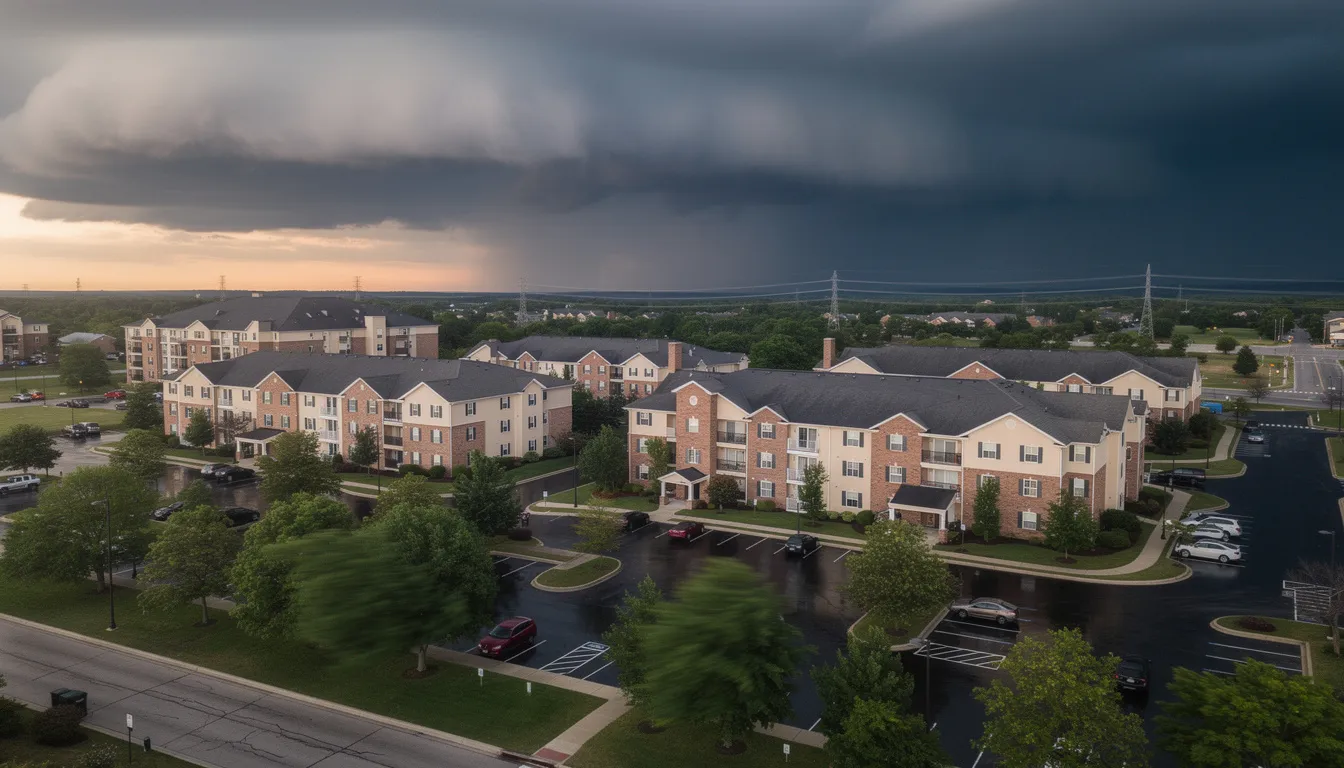
Summer thunderstorms and remnants of Gulf hurricanes cause roof, window, and envelope failures—50+ significant storms annually in metro Atlanta
Winter cold snaps freeze risers and domestic water lines in stairwells and exterior walls, particularly in buildings without adequate insulation in attic runs
Spring pollen and dust loads complicate post-fire HVAC cleaning, requiring additional air scrubbing and filter replacement
Proactive measures for Atlanta property management:
Annual pre-storm inspections of roofs, scuppers, downspouts, and flashing in May
Pre-winter inspections of attic plumbing and exterior wall pipe protection in November
Regular dryer vent cleaning (annually minimum) and kitchen exhaust inspections in multifamily and condo properties
Periodic coordination with local fire departments for pre-incident plans in larger or complex properties
Water shut-off location mapping for every building in your portfolio
Building a Pre-Loss Plan and Vendor Playbook
The best time to choose a restoration vendor and document your restoration process is before your building fills with smoke or water. Pre-loss planning converts chaotic emergencies into controlled projects.
Build your contact tree:
Property manager (primary and backup)
Regional manager
Ownership or asset manager
Insurance broker (direct line, not generic 800 number)
Preferred restoration vendor (office, after-hours, project manager cell)
Plumber with 24/7 availability
Electrician with 24/7 availability
Roofer for emergency tarping
Define intervention thresholds:
Scenario | Response |
|---|---|
Isolated leak under 50 sq ft, Category 1 | Maintenance handles, document with photos |
Leak over 50 sq ft or any Category 2/3 | Call restoration contractor immediately |
Any visible smoke damage beyond single room | Call restoration contractor immediately |
Fire department responded | Call restoration contractor before FD leaves scene |
Multiple units affected | Call restoration contractor and notify ownership |
Pre-authorize emergency services:
Set NTE limits ($5,000-$15,000 for mitigation) to avoid after-hours approval bottlenecks
Document authorization in writing with clear scope parameters
Review annually and adjust for portfolio changes
Standardize across your portfolio:
Same documentation protocol (photos, logs, incident reports) for every property
Same emergency communication templates
Same vendor scorecard measuring response times, communication quality, and claim outcomes across losses
Shared drive or portal where all team members can access templates and contacts
Conduct annual tabletop exercises:
Walk through a mock fire in a 200-unit Gwinnett asset or a burst main line in a Downtown Atlanta office floor. Test your call trees. Verify vendor response commitments. Identify decision-making gaps before they matter.
One hour of preparation prevents days of chaos.
When to Involve Industrial Hygienists, Engineers, and Other Specialists
Not every loss needs third-party consultants. But some absolutely do, and sophisticated managers know the difference. Calling specialists when warranted protects your property and your liability exposure.
Industrial hygienist or environmental consultant scenarios:
Suspected asbestos in flooring, ceiling tiles, or pipe insulation in pre-1980s stock (common in parts of Atlanta, Decatur, and College Park)
Lead paint concerns in older buildings requiring demolition
Complex smoke migration in healthcare, senior living, or sensitive occupancies where air quality documentation is crucial
Mold claims with ongoing tenant health complaints—third-party testing establishes defensible baseline
Any situation where tenant or employee health claims seem likely
Structural engineer scenarios:
Heavy charring of load-bearing framing, roof trusses, or structural walls
Concrete spalling in parking garages or podium decks after intense fire exposure
Foundation concerns after significant water intrusion in areas with expansive clay soils (common in Hall County)
Any fire or water event where structural compliance is questioned by the building official
How we coordinate with specialists:
Provide pre-mitigation documentation for their independent assessments
Follow written protocols (mold remediation plans, asbestos abatement specifications, structural repair scopes)
Ensure inspection and clearance before concealing any work
Archive final reports in the property’s risk management files for future reference
The cost of specialist involvement—typically $2,000-$10,000 for most assessments—is minor compared to litigation exposure from inadequate evaluation of construction, materials, or contamination issues.
Conclusion: Turning a Loss Event into a Controlled Project
Fires, smoke events, and water losses are inevitable in a large Atlanta portfolio. Chaos is optional.
The managers who consistently protect their assets and their careers share common practices: they act within hours, not days. They use IICRC-certified professionals who understand both fire damage restoration and water damage mitigation—because the two almost always overlap. They vet vendors hard before giving them keys to their assets. They document everything with an eye toward future claims, audits, and potential litigation. And they build pre-loss plans that convert emergencies into projects with defined scopes, timelines, and accountability.
We’ve worked hundreds of losses across Gwinnett, Fulton, Cobb, Cherokee, and Hall counties. The difference between a property that recovers quickly and one that bleeds cash for months comes down to preparation, vendor quality, and speed. If you’re a property manager reading this, challenge your current restoration vendor with the questions in this guide. Review your pre-loss plan—or create one if you don’t have it. And if you want to work closely with an operator who understands both the technical and financial stakes of fire restoration and water damage restoration services in metro Atlanta, reach out for a pre-loss consultation. The right systems and the right partners turn catastrophic losses into manageable projects.

